
In most cases, no. A garden room is usually permitted development, which means you can
build it without a planning application. The rules are about height, position and how much
of the garden you cover, and they are more generous than most people assume.
Here is what actually decides it.
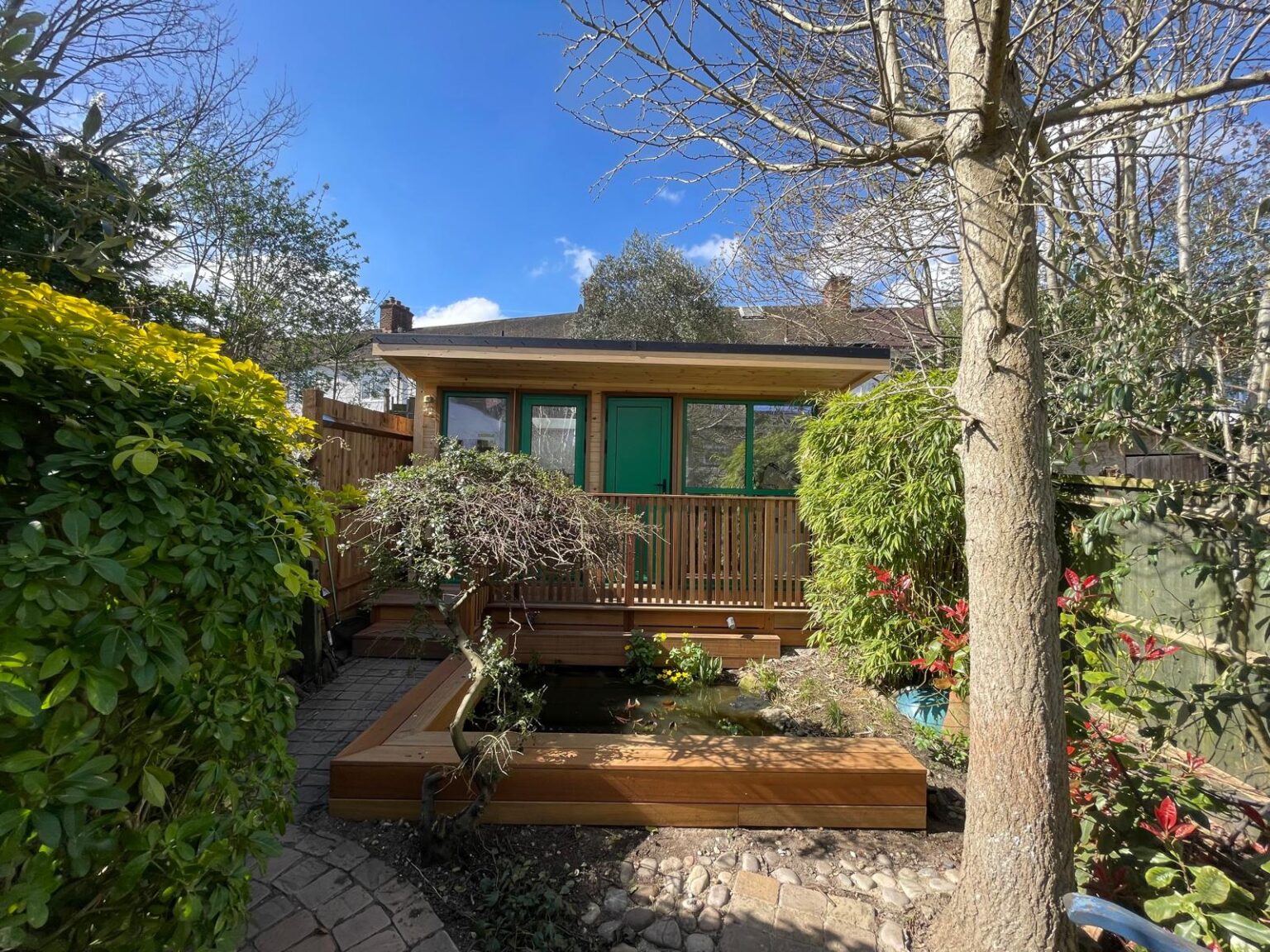
The rules that make a garden room permitted development
Your garden building will normally be permitted development if all of these are true:
- Single storey, with eaves no higher than 2.5 metres.
- Maximum overall height of 4 metres with a dual-pitched roof, or
3 metres with any other roof shape. - 2.5 metres maximum if any part of the building sits within two metres of a
boundary. In a narrow London garden this is usually the limit that applies. - It sits behind the front wall of the house, not forward of it.
- All your outbuildings and extensions together cover no more than half the land
around the original house. - No veranda, balcony or raised platform over 0.3 metres.
- The use is incidental to the house. An office, gym, studio or workshop is
fine.
The four situations where you will need permission
1. You live in a flat or maisonette
Permitted development rights for outbuildings apply to houses only. If your home is a flat, you
need planning permission whatever the size of the building.
2. You are in a conservation area
Two extra restrictions apply. You cannot build to the side of the house, and a building over 10
square metres more than 20 metres from the house loses its permitted development rights. We cover
the local detail in our guide to garden room planning permission in Southwark.
3. Your house is listed
You will need listed building consent for work within the curtilage, which includes a garden
building. That is separate from planning permission and you may need both.
4. You want to sleep in it
Permitted development covers buildings incidental to the house. Anything intended as sleeping
accommodation or a self-contained annexe is a different use and needs permission.
What about building regulations?
Separate system, separate rules. A detached single storey building under 15 square metres
generally needs no approval. Between 15 and 30 square metres it usually still does not, provided
there is no sleeping accommodation and it is either a metre from any boundary or built
substantially from non-combustible materials. Over 30 square metres, approval is required.
Electrical work is notifiable whatever the size.
Should you get a Lawful Development Certificate?
It is not compulsory, but it is worth it. If your build is permitted development, you can apply
to the council for a certificate confirming that. It costs far less than a planning application,
and it is the document a buyer’s solicitor will ask for when you come to sell.
Frequently asked questions
How high can a garden room be without planning permission?
Up to 2.5 metres if any part is within two metres of a boundary. Further than two metres from every boundary you can go to 3 metres with a flat or mono-pitched roof, or 4 metres with a dual-pitched roof, with eaves no higher than 2.5 metres.
How close to the fence can I build a garden room?
There is no minimum distance, but if you build within two metres of a boundary the whole building must be no more than 2.5 metres tall.
Do I need permission for a garden office?
Usually not. A garden office is incidental to the house, so it falls within permitted development as long as it meets the height, position and coverage limits.
Can I run a business from a garden room?
Working from it is fine. If it changes the character of the property, for example customers visiting regularly or staff on site, that can amount to a change of use and need permission.
Thinking about a garden building?
We design and build bespoke garden rooms and studios, purpose built garden offices, garden art and music studios, garden yoga and exercise studios and bespoke garden sheds and storage across East Dulwich, Dulwich, Peckham and the surrounding South London areas. See our garden building project gallery or the project map of every build, then book a free site visit and we will give you an honest estimate with no obligation.
General guidance, not planning advice. Rules change and every address differs. Confirm your
own position with your local planning authority before you build.